
The Gaze in Art
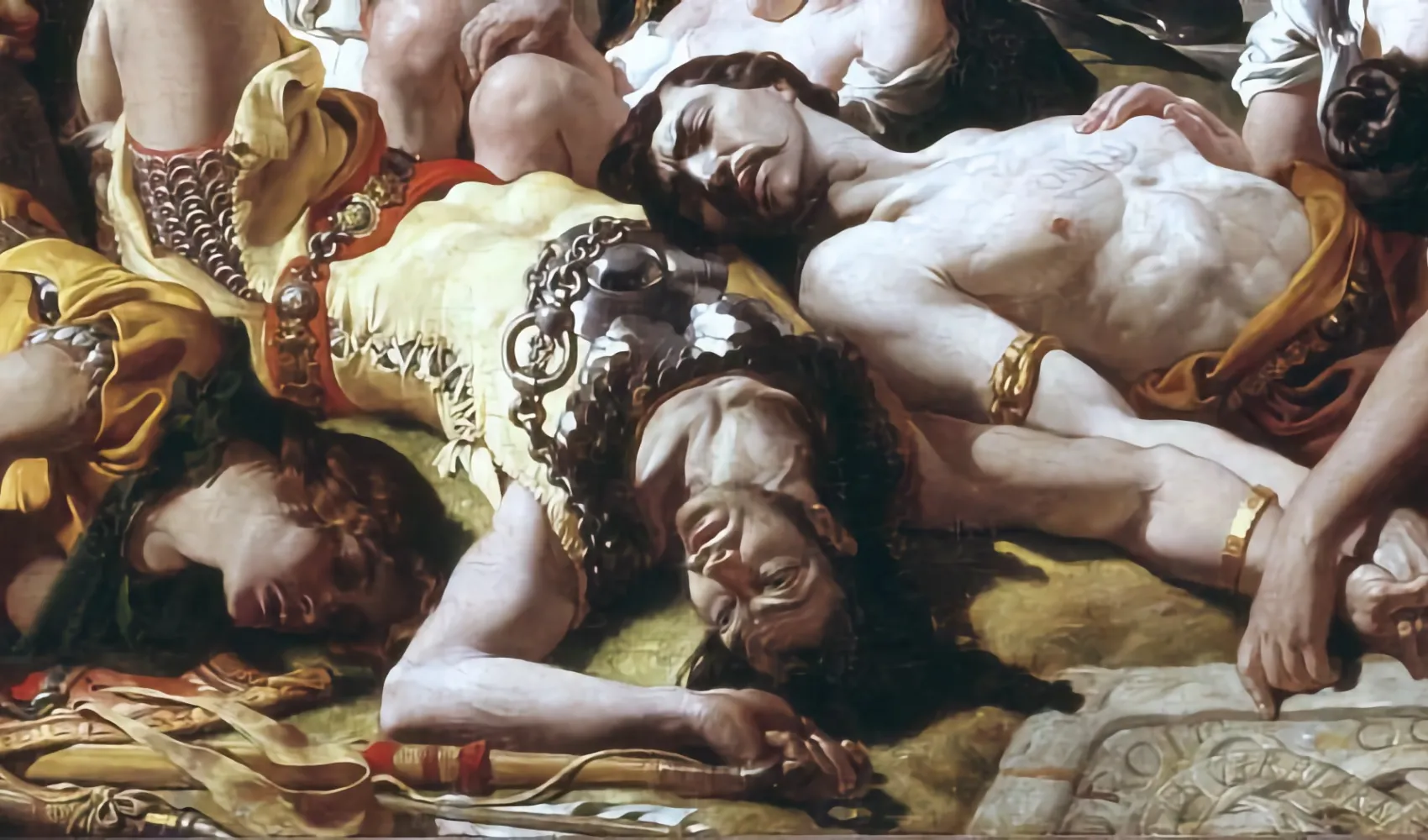
Daniel Maclise (1806-1870), detail from 'The Marriage of Strongbow and Aoife. Image © National Gallery of Ireland
Many women in the past were unable to represent their everyday lives through visual art due to a lack of social, cultural and financial support — including artistic training and resources. Portrayals of women in art have tended to be seen as either saints or sinners because these works were primarily created by men artists.
With this in mind, we are going to use the concept of The Gaze as a way to look at different representations of women in your National Collection at the National Gallery of Ireland.
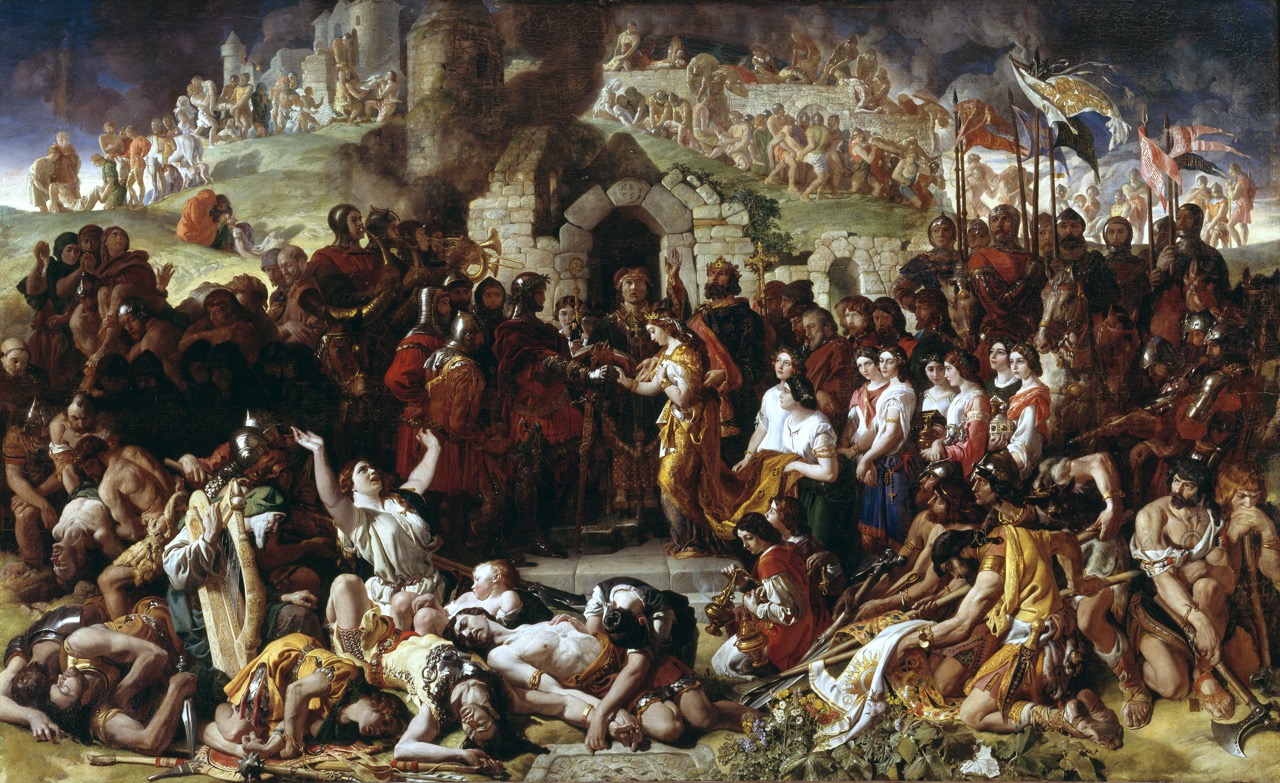
Let’s take a closer look at artist and illustrator Daniel Maclise’s ‘The Marriage of Strongbow and Aoife’, specifically the woman crying to the sky near the bottom left-hand side of the painting. In this monumental historical artwork, each figure is steeped in symbolism and drama. But how do we look at her and what is her story?
The woman stands out because her expression and pose contrasts against the people surrounding her, who are either laying down, or with their heads bent.
In the watercolour and gouache version of the painting, she’s depicted differently. Rather than being fully dressed, she’s portrayed partially nude.
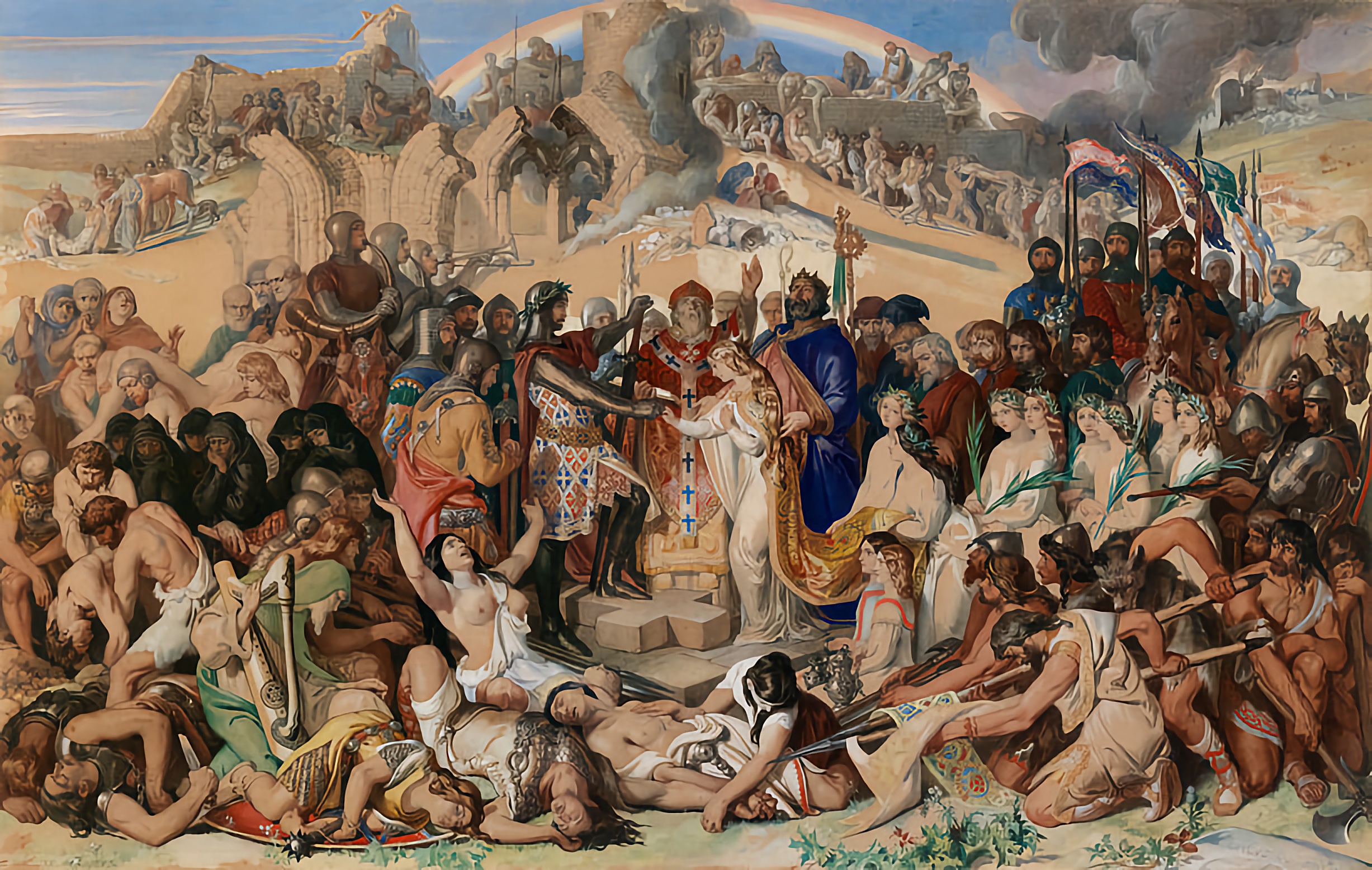
Why do you think the version on display presents this woman differently?
How does that difference affect your engagement with the painting and her story?
Might this change have something to do with the fact that the painting was part of a commission for the new Houses of Parliament in London?
In Maclise’s artwork, we are looking at the woman cry over what appears to be a child. She’s grieving as she looks away from both the viewer and the scene around her. Can you see any similar depictions of women in art around the Gallery?
In Ireland during the early 20th century, the majority of women studying or practising art shared similar social backgrounds. They tended to be predominately upper-middle-class professionals, and artistic pursuits formed part of their education.
These women often rejected contemporary social conventions in pursuit of their own goals as artists, educators, and entrepreneurs. Their backgrounds played a central role in facilitating their careers.
Throughout art history across Europe, women artists who did receive training and establish careers for themselves were typically the daughters of painters, members of religious orders, or from privileged backgrounds. Even then, relatively few women were able to achieve recognition or success as artists in the past.
French painter and Impressionist Berthe Morisot typically painted domestic scenes and activities of middle-class women throughout her creative career. These subject matters were considered appropriate for women artists of the upper middle class during this time.
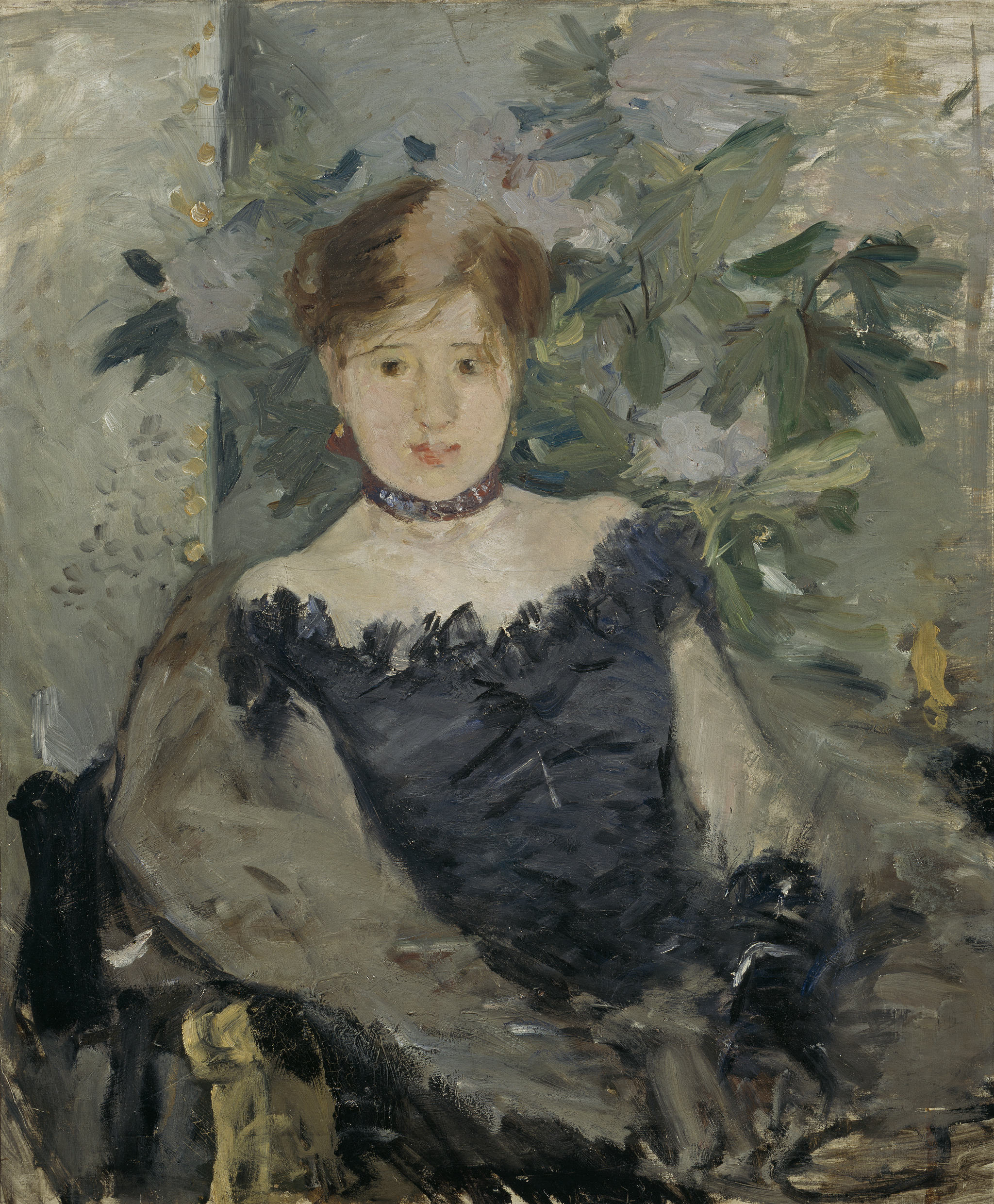
‘Le Corsage Noir’ is one of several portrait-style paintings of stylish women in interior settings that Morisot produced between 1878 and 1880. As the title suggests, she intended this work to be regarded as an Impressionistic exercise in light and colour.
Morisot's daughter was born in November 1878, the same year that the artist painted this piece. She might have spent more time indoors, pushing her to explore the effects of light and colour within the studio.
This painting depicts a professional model posed in evening wear. Although described as ‘black’, the dress has been painted with feathery strokes of dark blue. Impressionism was a 19th century art movement characterised by small brushstrokes and open composition creating the impression of form. Due to this style, how do we as viewers look at this piece? Can we connect with the subject or even artist behind the piece?
We might look at this painting through the Female Gaze, which imagines way of looking through the eyes of women. It refers to visual portrayals that evoke an emotive response rather than relying on depictions of physical actions.
Often, these feelings would be related to the impact of being objectified by the Male Gaze. Rather than looking from the outside, the onlooker is placed in their position, grounded in the lived experiences of women.
Generally, the presence of the Gaze within art has been used against the subject by seeing them as one type of way. However, the Gaze as a concept can also be used as a radical method for resistance when we look back upon those who try to define us. The Oppositional Gaze resists in the act of looking back.
As theorist and author bell hooks writes in her 1992 essay collection Black Looks: Race and Representation, “[…] There is a critical gaze, one that “looks” to document, one that is oppositional. […] One learns to look a certain way in order to resist.”
The next time you visit the National Gallery of Ireland, take some time to question how do you look at certain paintings? And why do you look at these works in that way?
Resources
If you would like to further explore depictions of women in art as well as art created by women artists, here are some useful resources from the National Gallery of Ireland: In Focus: The Emancipated Spectator
As part of an ongoing online series, we link works from our collection with key art historical, theoretical or philosophical texts. Aimed especially at third-level students, but accessible to all, this series aims to support in-depth engagement with our collection and the selected texts.
The Gallery Youth Panel Playlist: Name Five Women Artists
The Gallery’s Youth Panel is a group of young people (ages 16-25) working together to make fun and unique experiences for young people at the National Gallery of Ireland. As part of International Women’s Day 2023, they created a playlist of women artists on Spotify, drawing upon a range of styles, genres, and themes.
Source
Source provides online access to the National Gallery of Ireland's collections of archives associated with the history of art in Ireland.
Apollo Project
The Apollo Project is programming by young people, for young people (ages 16-25) at the National Gallery of Ireland and Russborough House.
If you would like to get involved, you can contact Apollo Fellow Oisín Kenny at okenny@ngi.ie or follow the Apollo Project Instagram (@ApolloProjectIRL).