Metal
Humans began working with metal about 6,500 years ago and since then we’ve found countless uses for it, from smart phones to frying pans, hip replacements to musical instruments. Metal plays a vital role in our story and historic ages are even named after the different metals we have learnt to use.
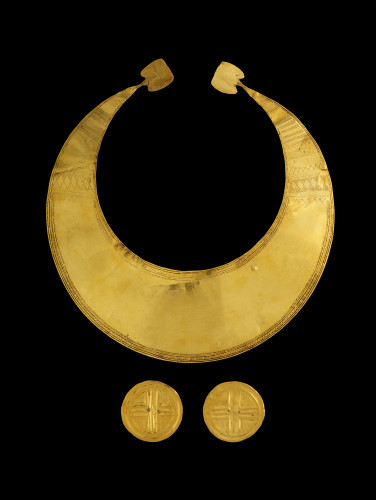
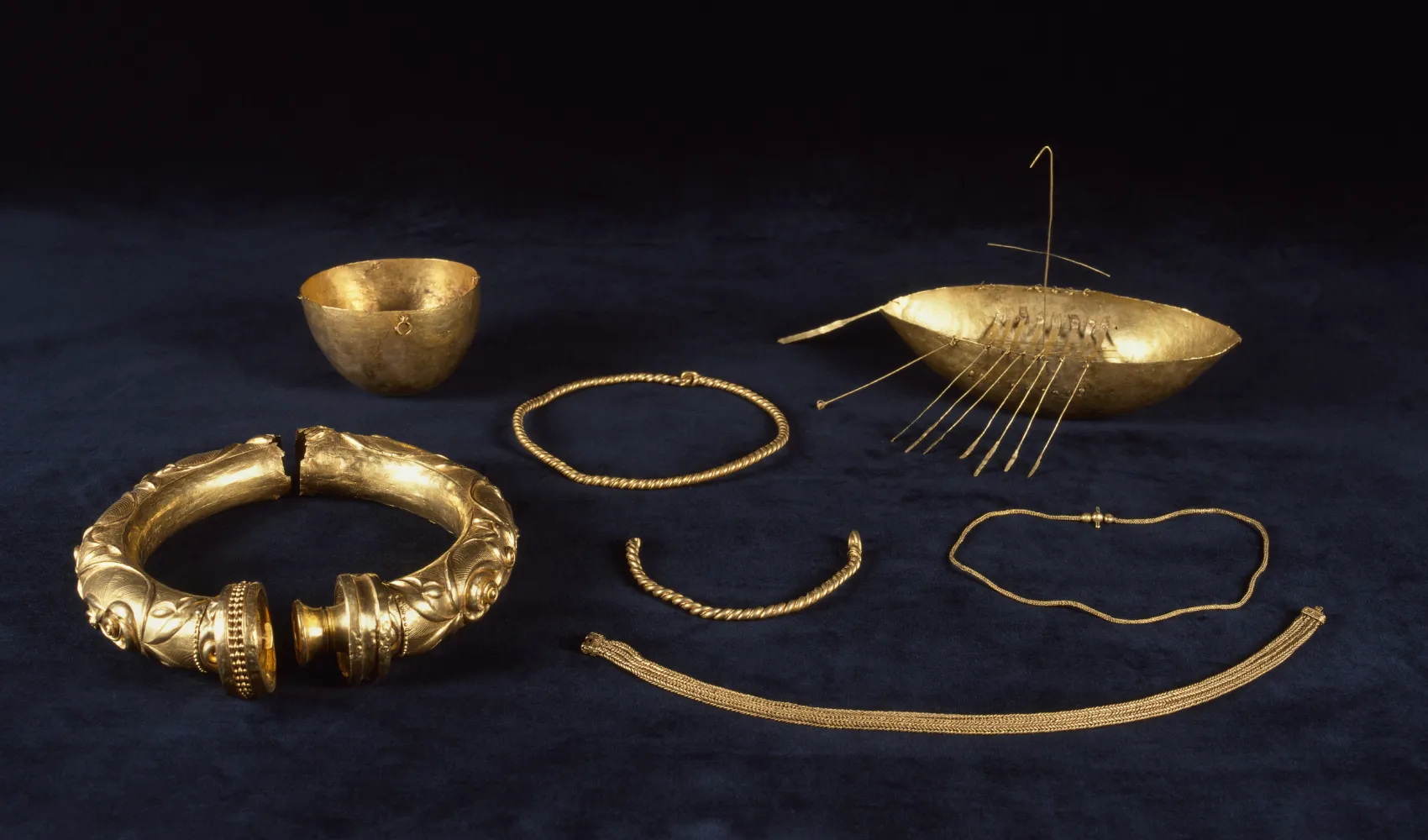
Some of the oldest metal artworks are made of gold and different cultures around the world have made remarkable things from it. In 1896, Thomas Nicholl and James Morrow were ploughing a field at Broighter when they discovered one of Ireland’s most spectacular treasures - a hoard of gold dating to the first century BC. A small model boat is Ireland’s oldest depiction of a ship.
The precious nature of gold means that many historic artworks haven’t survived. Many Aztec gold works of art were melted down into bars by conquistadors so they could be easily transported back to Spain.
Copper was an essential metal in the ancient world and remains one today. It’s a brilliant conductor of heat and electricity which means it’s all around you even if you can’t see it in the form of wires and pipes. Artists have used copper in some very intriguing ways. Printmakers use copper plates to carve or etch images on to, ready to be covered in ink and pressed on to paper. Copper minerals have also been used to make blue and green pigments and the Egyptians even used it as makeup.
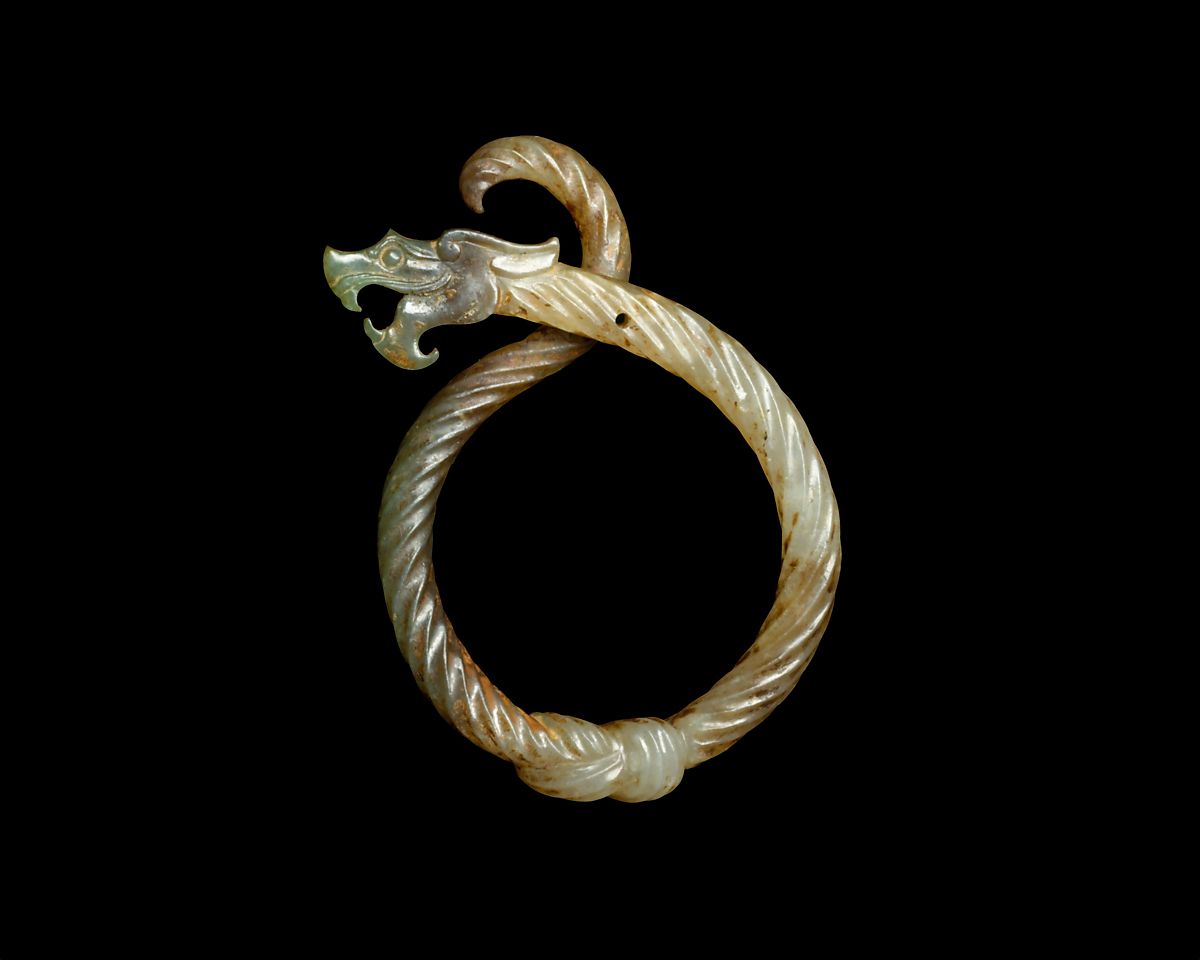
When it was discovered that copper and tin could be heated together to make a stronger metal called bronze it changed the world. Bronze was one of the most important discoveries for humans, let alone artists. In China, bronze was used to make a range of things, including parts for chariots. Elaborate bronze vessels for rituals were decorated with fantastic beasts, like dragons, and monstrous masks called taotie.
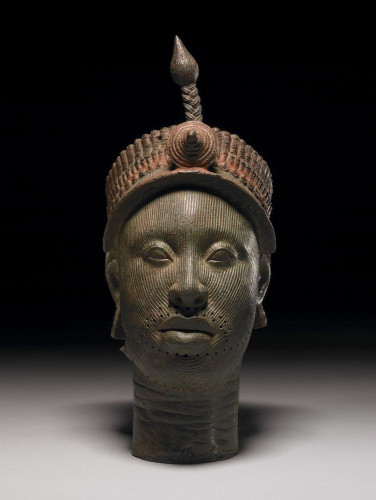
In 1938, a group of incredibly realistic copper and brass heads were discovered in the grounds of a palace in Ife in Nigeria. One wears a crown and is thought to depict a ruler. They were made in the 15th century using the lost wax method of casting. This is when a model is carved from wax, covered in clay and then heated so the clay is fired and the wax pours out. Molten metal is then poured into the void to make a sculpture.
Iron replaced bronze as the most used metal at different times around the world. One of the ways it shaped societies was in the form of weapons and tools but artists have used it too. Steel is an alloy of iron and carbon which the American artist Alexander Calder used to make mobiles.
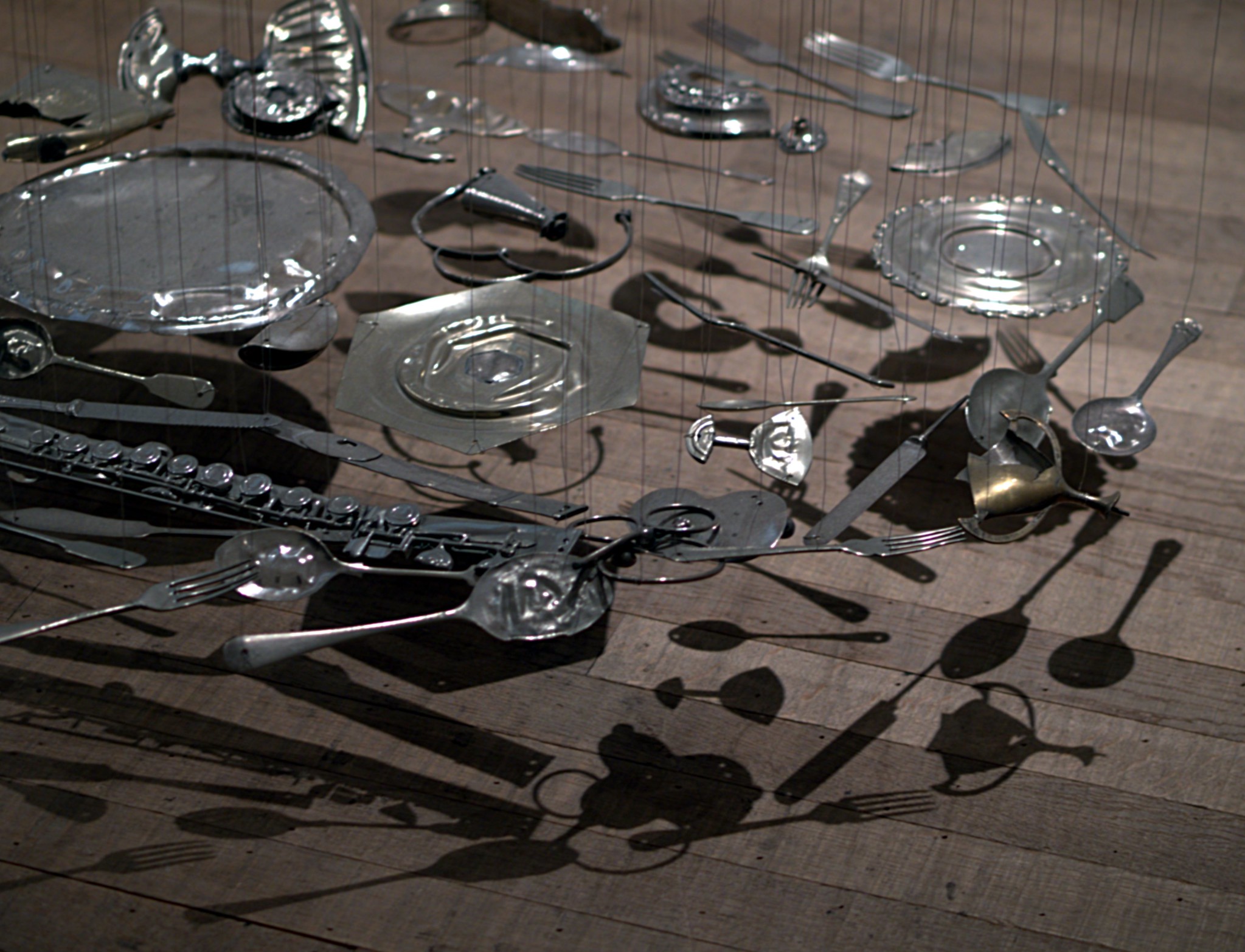
But contemporary artists still use valuable metals. Cornelia Parker had over a thousand silver objects, including trombones, spoons and trophies, squashed by a steamroller. She then suspended them from the ceiling using copper wires in thirty circular groups and called her artwork ‘Thirty Pieces of Silver’.