
Cubism
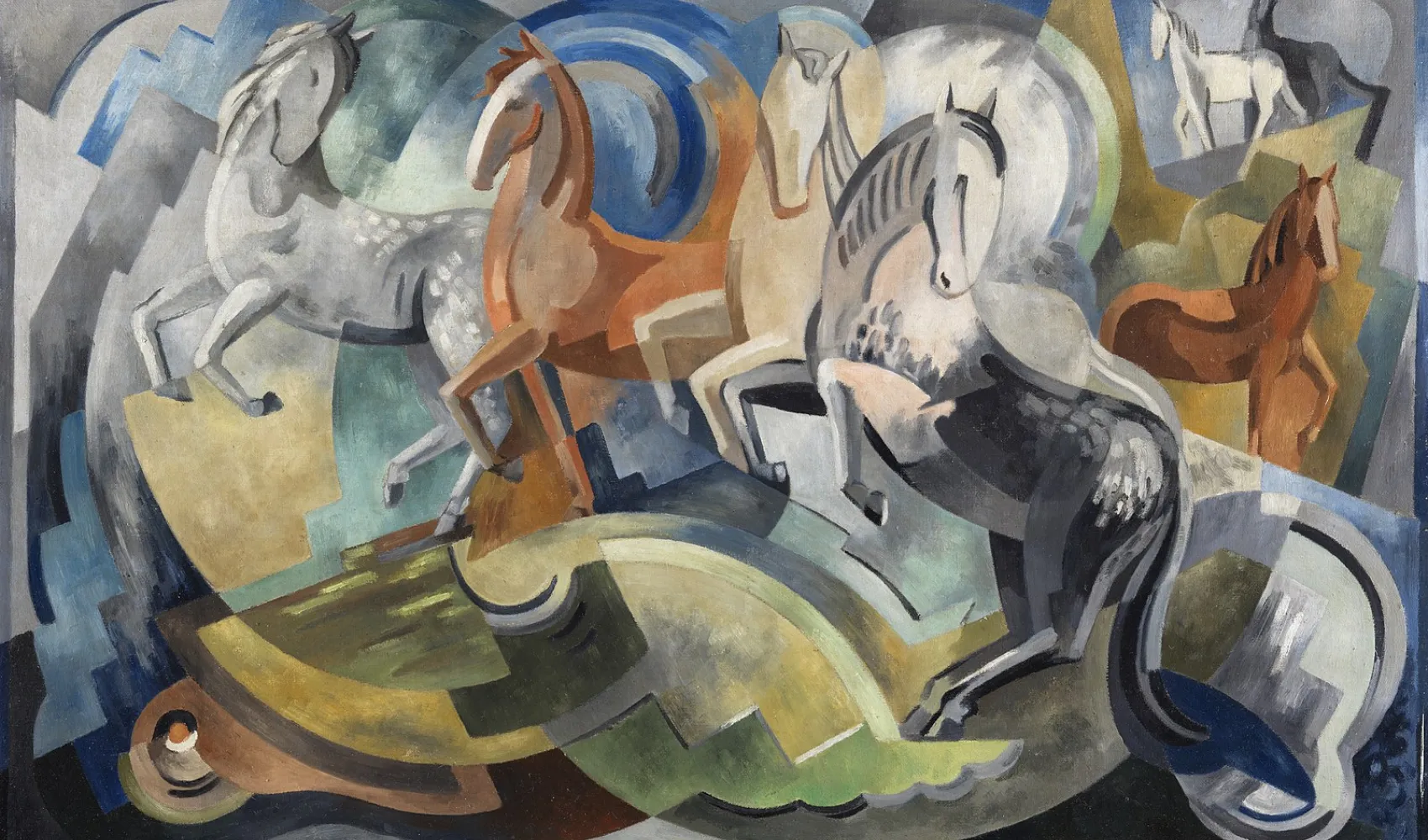
Mainie Jellett (1897-1944), Achill Horses, 1941. This work is licensed under a Creative Commons Attribution 4.0 International License.
‘Sub-Human Art’
Cubism at The National Gallery Of Ireland
By Oisín Kenny, National Gallery of Ireland
Cubism is the term for a revolutionary new approach to represent reality in European painting and sculpture, which emerged during the early 20th century.
Cubists wanted to show the whole structure of an object without using ‘traditional’ techniques, such as perspective or shading, to make them appear realistic.
Rather than showing an object, landscape, or person as what they look like, Cubists sought to show what they really were.
Cubists did this by creating abstract art representing the subject from all angles or with overlapping picture planes. They would usually break down the subject into geometric shapes, such as cones, spheres, or cubes, to highlight the flatness of the picture’s surface.
They would often depict objects from lots of different angles as a way of representing the three-dimensional quality of these objects.
Examples of Cubism in Your National Collection at the Gallery
Mainie Jellett (1897-1944)
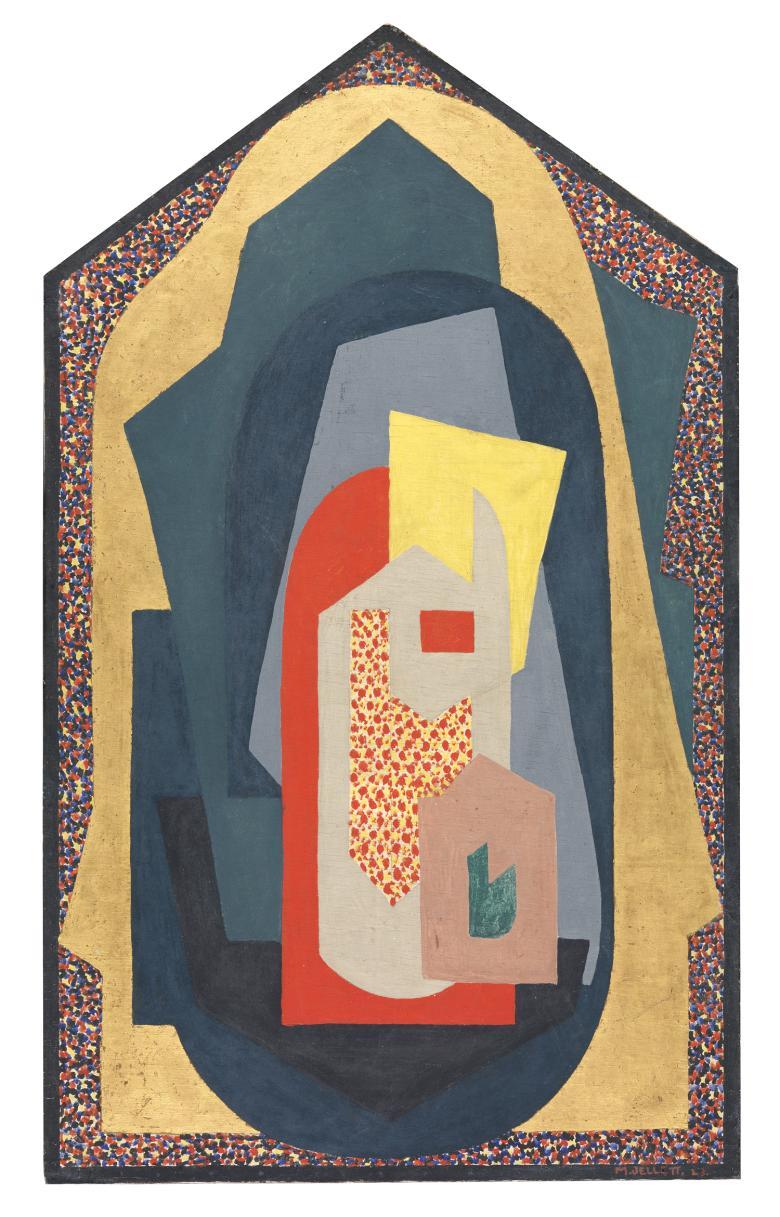
Painter and early advocate of abstract art in Ireland Mainie Jellett encountered Cubism while working in Paris. She previously studied at the Metropolitan School of Art in Dublin and the Westminster Technical Institute in London. Inspired by Cubism, she began to explore rhythm, colour and form in her own work.
In Jellett’s Decoration, the style, colours and materials are very similar to classic religious icons depicting the Madonna and Child.
For example, compare Decoration to religious icons such as Tommaso del Mazza’s The Virgin and Child with Saints or Donor and The Virgin and Child, Saint John the Baptist and Prophets by an unknown artist. The gold in the background along with the strong blue and red are examples of colours used in both religious icons and her own painting.
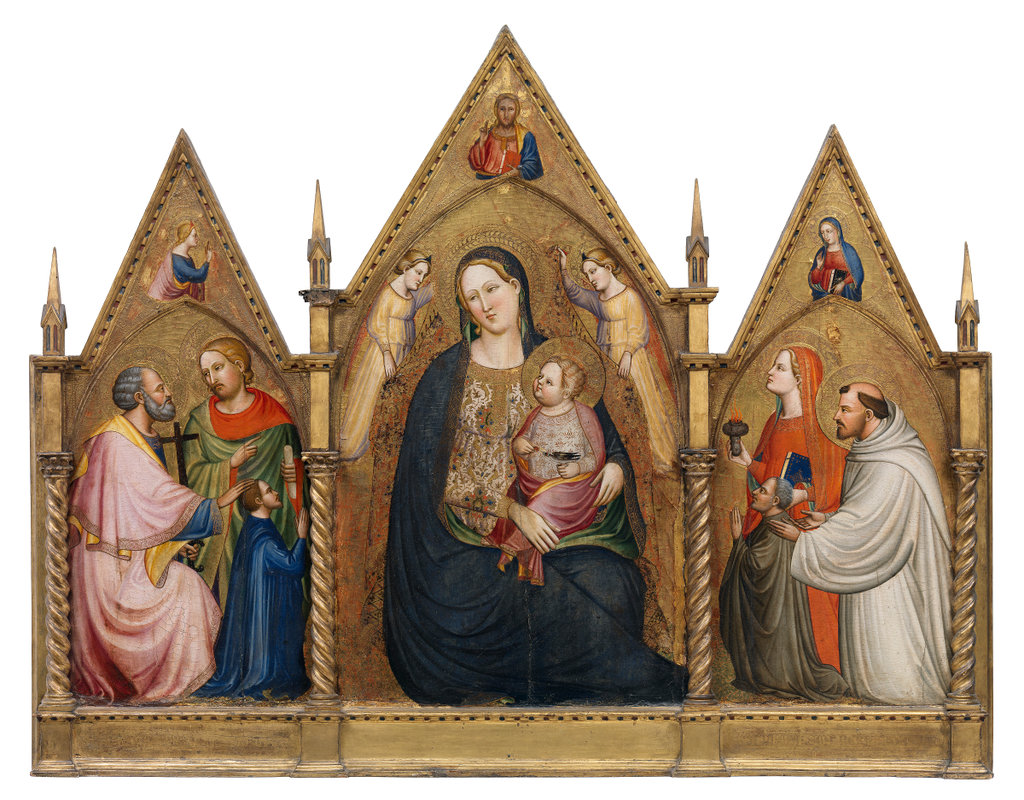
However, in Jellett’s work, these figures are fractured into core shapes and colours, devoid of any physical characteristics such as facial features. The smaller shapes nestled among the larger shapes are made to look like a mother holding a child.
Rather than showing these figures as they might be seen, the painting strives to show who they really are. It represents the scene in a three-dimensional quality.
Do you see the resemblance? Do you like the technique she uses?
Decoration was one of the first abstract paintings shown in Ireland. When this painting went on display at a Society of Dublin Painters group show in 1923, it caused uproar. A reviewer from The Irish Times wrote of Jellett’s work in the exhibition, “… to me they presented an insoluble puzzle.” Another journalist referred to the “sub-human art of Miss Jellett.”
Do you see what might have sparked this outrage? How does Cubism make you feel?
Jellett would return to themes of spirituality throughout her creative practice. By the early 1940s, she had developed a singular form of expression, which featured the integration of landscape and figurative detail, but also acknowledged traditional subject matter.
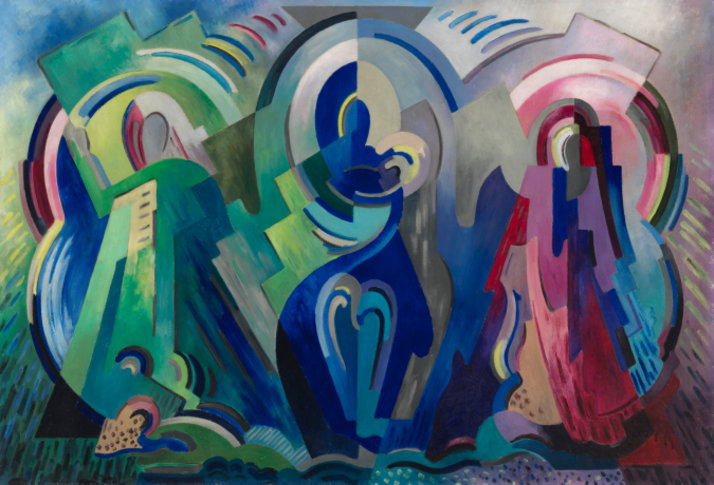
For example, in her painting The Virgin of Éire, the Madonna and Child are flanked by St Patrick and St Brigid. Contrasting her earlier painting Decoration, the forms in this piece are now more distinct and defined, each stands out from the other with an assigned colour theme.
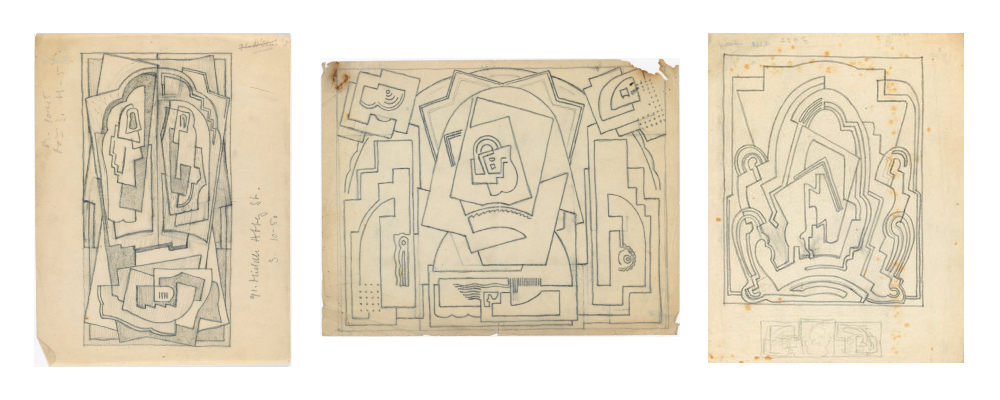
There is a puzzle-like quality to Jellett’s work, even in terms of how she prepared her paintings.
She utilised a process known as translation to further understand rotation, taking one shape and repeating it across different locations on a page. She also took a shape, for example a rectangle, and repeatedly drew the shape at multiple angles, layering each shape onto the other.
Juan Gris (1887 – 1927)
Spanish artist José Victoriano González-Pérez, better known as Juan Gris, was drawn to the figure of the Pierrot, a character from French pantomime.
For many avant-garde artists, this melancholy clown came to embody the idea of the artist as an outsider. However, there was also a playful side to the character.
Gris painted Pierrot while recovering from pneumonia in the south of France. Gris experienced depression throughout much of his adult life. From the late 1910s onwards the figure of Pierrot became a prominent motif in his work, expressing his own mental state.
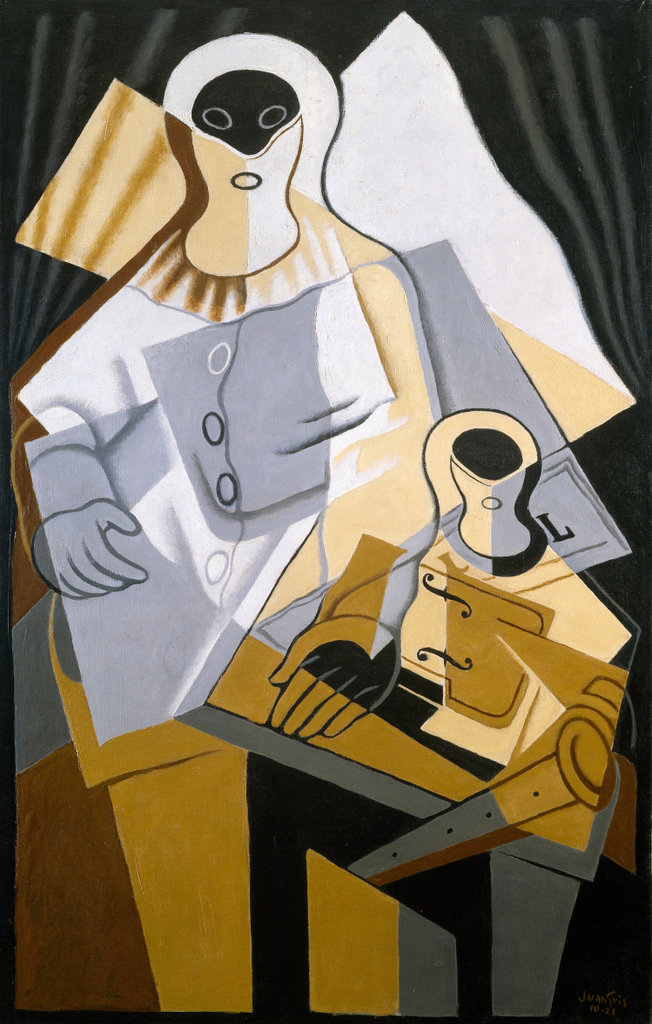
In this painting, Gris presents the Pierrot by a café-table. Resting on the table are musical instruments, a newspaper, and a glass, which is similar in shape to the figure’s masked face. The colour scheme gives the composition a collage-like appearance.
What is the significance of the subject’s masked appearance?
Does the Pierrot remind you of any other figures in art?
Resources
If you are interested in finding out more about Cubism or would like to make your own Cubist artwork, here are some useful resources from the National Gallery of Ireland website: In Focus: Cubism
As part of an ongoing online series, we link works from our collection with key art historical, theoretical or philosophical texts. Aimed especially at third-level students, but accessible to all, this series aims to support in-depth engagement with our collection and the selected texts: Drawing Activity: Shapes and Spatial Relations
This drawing exercise, encourages you to use your observational skills and explore spatial relations, forms and negative spaces within the everyday: National Gallery at Home: Mainie's Mares
Learn how to create your own drawing inspired by Mainie Jellett's painting Achill Horses with this step-by-step video and online resource: Mindfulness and Art: The Virgin of Éire
As part of our online mindfulness guide, spend 5 minutes sitting in silence, looking at this painting and reflect on these prompts:
• How do you feel while looking at this painting?
• What is the mood and atmosphere in the painting?
• Why do you think the artist created the painting?
Source
Source provides online access to the National Gallery of Ireland's collections of archives associated with the history of art in Ireland.
Apollo Project
The Apollo Project is programming by young people, for young people (ages 16-25) at the National Gallery of Ireland and Russborough House.
If you would like to get involved, you can contact Apollo Fellow Oisín Kenny at okenny@ngi.ie or follow the Apollo Project Instagram (@ApolloProjectIRL).